
- About Us
- Programs
- International School
- Support Us
Rabbi Dr. Sharon Shalom, the founder and director of the International Center for the Study of Ethiopian Jewry at Ono Academic College, recently wrote an article in the Shabbaton newspaper, entitled “Between What Sounds Right and What Actually Exists.”
Rabbi Shalom begins with what seems like a small question of Hebrew phrasing that relates to a previous article he had written. When referring to the Rabbinic law that unmarried men and women may not touch, should people describe this as being, “shomer negiah” (“one who guards touching”), or should they use a more “logical” phrase like, “avoiding touch”? He shares a short exchange with Avshalom Kor, Israel’s national popular linguist of the Hebrew language, who notes that popular speech often wins out over grammatical precision—and Rabbi Shalom uses that gap to introduce his main claim: what *sounds* correct, polished, and socially acceptable is not always what *actually exists* in lived reality.
From there, he argues that the deeper issue is not language but fear. As people and societies feel less secure—about values, identity, and status—they increasingly split into two layers: an outward layer of “proper” talk and approved postures, and an inward layer of thoughts and feelings that remain unspoken. He frames this through the psychological idea of a “persona,” literally a mask: a public self shaped by anxiety about rejection, criticism, and losing belonging.
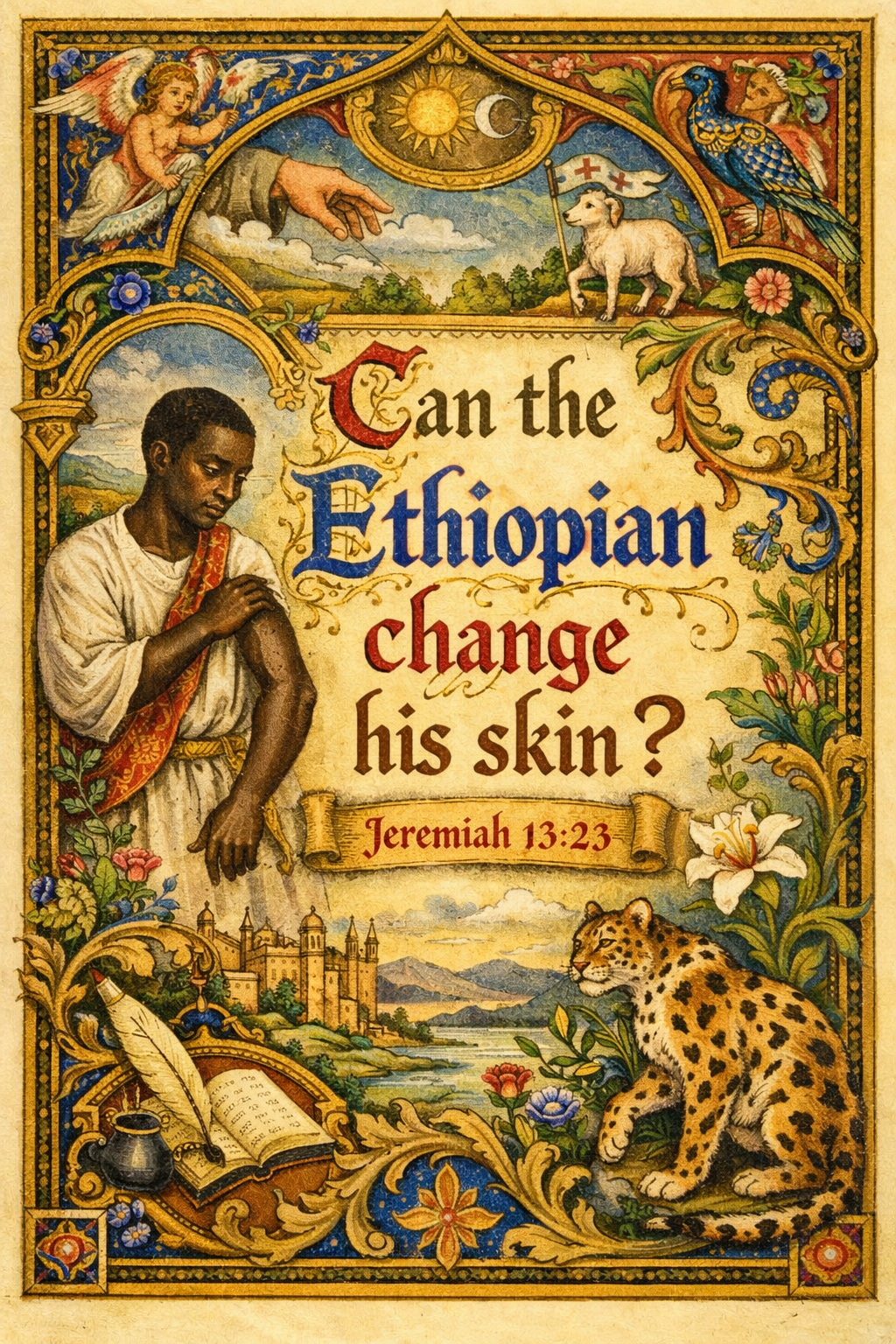
Rabbi Shalom then grounds the argument in a painful classroom incident. A mother contacts him after her daughter is offended during a school lesson that quotes the biblical verse that is often translated as “Can the Ethiopian change his skin?”) Jeremiah 13:23( The discussion of the term (and its modern social charge) quickly turns into children ranking who looks “more” or “less” like the stereotype—creating an unspoken hierarchy of skin color inside a classroom that officially speaks the language of inclusion. The mother’s question—how to respond, how to protect her child, how to continue—becomes the article’s moral center.
He widens the lens again with a contemporary example: a video posted to President Donald Trump’s Truth Social account and later deleted, depicting Barack Obama and Michelle Obama as primates; it sparked public outrage, and the post was later blamed on an unidentified staffer.
Rabbi Shalom pushes back on the comfort of scapegoating, invoking the lesson of silence-as-consent, and asking whether the reaction would have been comparable if President Trump were mocked in an analogous way. The point is not only hypocrisy, but what our emotional intensity reveals about buried assumptions: who feels secure in their humanity, and who feels the image “touches” a deeper social truth.
He ends without offering a neat solution. Instead, he returns to the question that links every example: Who is afraid of whom—and why? Are we reacting to words and images themselves, or to what they expose about the hierarchies we still carry beneath our official commitments to dignity and equality? He invites readers to pause, answer the mother’s question for themselves, and write back.
The original article in Hebrew can be read here: https://shabaton1.co.il/?p=45496