- About Us
- Programs
- International School
- Support Us
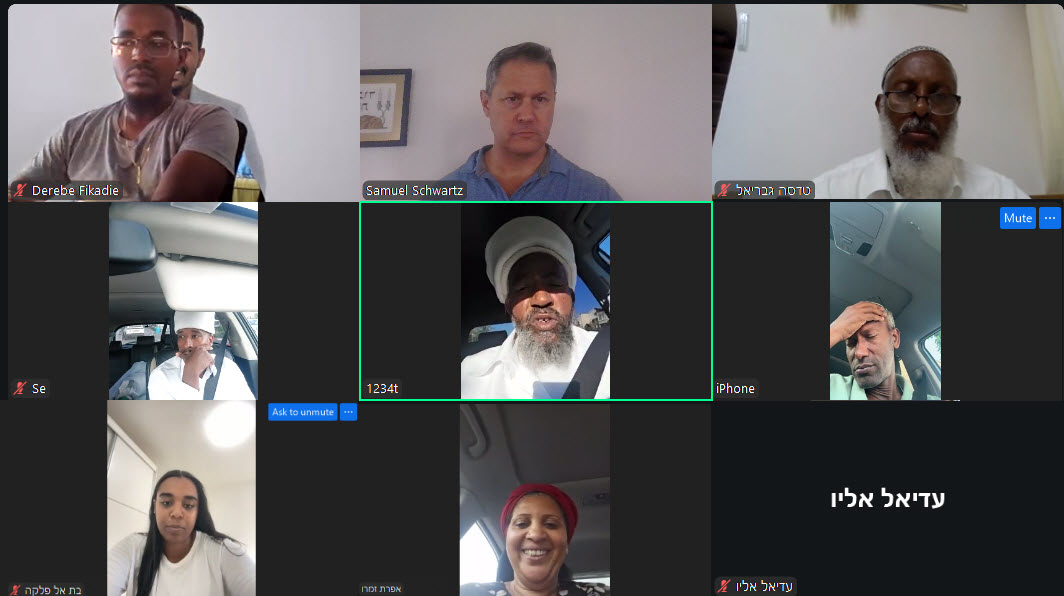
In the most recent session of the UJA sponsored program to reduce intra-communal conflicts among Bete Israel, participants began with a discussion of the Tisha B’Av Fast/Holiday that took place the previous Sunday.
One participant reflected on experiencing it differently each year and prayed for the safe return of soldiers. Group leader, Dr. Samuel Schwartz, shared that October 7 had changed how he relates to the day. Group leader, Rabbi Dr. Sharon Shalom described his research on how Bete Israel in Ethiopia observed Tisha B’Av and the mourning period. Unlike Rabbinic tradition, they treated the three weeks as regular days, began mourning at the start of Av, and fasted on Tisha B’Av, with mourning lasting all month. Bete Israel’s focus was on redemption rather than destruction, with Kesim fasting on behalf of those unable to, possibly explaining the absence of a pikuach nefesh doctrine. One of the Keis participants detailed additional mourning customs, including avoiding meat. Rabbi Shalom noted that the period also commemorated, in Ethiopian tradition, the deaths of the patriarchs, which Rabbinic Judaism does not record. One of the Rabbi participants emphasized the community’s stringency, rooted in “avoiding sin” and creating safeguards. Rabbi Shalom contrasted this with “doing good,” noting Bete Israel’s balanced approach. Another Keis participant linked Beta Israel’s strictness in the mourning practices to their longing for a return to Israel and seeking divine forgiveness.
Dr. Schwartz then reviewed the program’s intervention process, noting that with returning participants, preparatory steps had been streamlined. The group worked on the format for final reports, covering objectives, indicators, implementation, evaluations, and lessons learned. The final conference is expected in November.
Participants shared intervention updates. One of the Rabbi participants is helping Ethiopian Jerusalemites improve employment opportunities, reduce community divisions, and secure municipal space for community use. Another participant is addressing stigma around special education in the Bete Israel community by encouraging parents to seek evaluations and services. Rabbi Sharon compared this stigma to reluctance toward mikva use due to past discrimination.