- About Us
- Programs
- International School
- Support Us
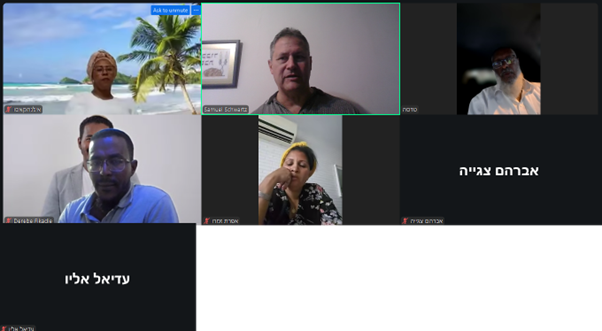
In the most recent session of the UJA sponsored program to reduce intra-communal conflicts among Bete Israel, participants began with a discussion of the Rosh Hashana, the 10 Days of Repentance and Yom Kippur that begins to tomorrow. Dr. Samuel Schwartz, Ono’s Director of International Programs shared the Dvar Torah of Rabbi Sharon Shalom, Director of Ono’s International Center for the Study of Ethiopian Jewry about Bete Israel’s approach to this period. He highlighted differences between Rabbinic and Ethiopian practices, including celebrating Rosh Hashana as one day rather than two, emphasizing joy over judgment, and understanding the shofar as a sound of celebration rather than mourning. He also noted that the Book of Nehemiah supports the Ethiopian view of Rosh Hashana as a happy day.
One participant reported on his recent community activities. He described leading selichot services for people with limited Hebrew, supported by pairing younger and older participants. He mentioned the integration of Kaparot into Ethiopian practice as a way of reinforcing charity.
Dr. Schwartz connected shared with the participants about the concluding meeting of Ono Academic College’s Beit Midrash for the Study of Bete Israel Texts. This program trains young Ethiopian Jewish leaders to study Geez texts and share them with their communities. At the recent closing event in Kiryat Gat, participants reflected on the high holy days, shared research articles, received books produced by earlier groups, and consulted with Keis Mentosnot about the role of the Keisim today. Sam showed a short film documenting the event.
Preparations for the year-end conference were also discussed. Sam reported that Rabbi Sharon had met with MK Moshe Solomon, Deputy Speaker of the Knesset, about hosting the conference in the Knesset. MK Solomon was supportive, and a date is expected to be finalized for the early winter.
The meeting also included the presentation of final intervention reports. One presented her work on summer camps for Ethiopian children in the North, noting that parents had come to appreciate their value when government programs were cancelled. Another reported on her three-month intervention in a special-education kindergarten, which improved children’s communication and social skills through creative and culturally integrated activities. The final report documented long-term Jerusalem project was summarized, highlighting successes in synagogue building, employment support, community education, and generational dialogue.
Dr. Schwartz praised the scope and depth of these interventions, noting both qualitative and quantitative successes. He encouraged participants who had not yet submitted their reports to do so quickly and suggested scheduling another meeting before the conference to review them. The session concluded with warm holiday wishes for a Gmar Hatima Tova and an easy fast.